As a global keynote speaker, Rich has been able to share his stories for both personal and professional success to countless audiences through in-person, virtual,...
My mission as a speaker is simple: help people grow, empower them to take action, and make sure they have fun while doing it.
It is always about them and never about me.
In this video, I share what drives me every time I step on stage — creating experiences that inspire confidence, connection, and joy. Because when people feel good, they open up, learn faster, and leave with something that truly sticks.

What do you get when you mix the power of emotional intelligence with a musical experience?
An award-winning keynote that is sure to move your audience to success and song.

In this keynote clip, I break down why emotional intelligence isn’t a soft skill — it’s a critical skill.
Companies that invest in emotional intelligence don’t just build better teams — they build better results. This clip highlights the numbers and insights that prove it.
Some of the best moments on stage are the ones you couldn’t possibly plan.
In this video, I’m sharing one of my favorite keynote memories — the time an unexpected moment turned into 2,000 people doing the YMCA together. It started as pure improvisation, but it became something unforgettable.

In this keynote moment, I draw a surprising connection between active listening and social awareness — and how the same skill that makes someone a great communicator is what helps producers create hit songs.
This clip shows how mastering the art of listening — not just hearing — can help you create stronger relationships, better teams, and your own version of a “hit.”

Songs trigger emotions — and so do meetings, deadlines, and change at work. In this keynote clip, I explain how music can teach us to recognize our emotional triggers and reset faster when stress hits.
Learn how to ‘get back to good’ with simple emotional intelligence techniques that help you stay resilient, connected, and in control.

Every audience is different — and that’s exactly why I never give the same keynote twice.
In this video, I’m sharing how I customize my message for each event and use my background in improv to read the room in real time. Whether it’s shifting tone, adjusting timing, or responding to audience energy, I believe great speaking isn’t about a script — it’s about connection.

As technology evolves, emotional intelligence has never been more important.
In this video, I share why EQ is critical in the age of AI — when data and automation dominate, it’s our human skills that make the real difference.

Companies that embrace emotional intelligence don’t just improve culture — they elevate performance, collaboration, and retention.
In this video, I share why emotional intelligence is essential for every organization that wants to thrive in today’s world. From leadership and communication to teamwork and client relationships, EQ impacts every level of success.

A great keynote doesn’t end when the event does — it leaves a lasting impact that people carry forward.
In this video, I share how I create impact for audiences by blending inspiration with practical tools they can use right away. My goal isn’t just to motivate in the moment, but to spark real change in how people lead, communicate, and connect long after they leave the room.

In this video, I share my core keynote themes, including emotional intelligence, motivation, leadership, executive presence, and personal empowerment. Each theme is designed to meet audiences where they are, challenge their thinking, and leave them feeling inspired to take action.

Every event has a different goal — and that’s why my keynote topics are built to inspire and drive results across any audience.
In this video, I share the core topics I speak on: emotional intelligence, motivation, leadership, executive presence, and sales kickoffs. Each one connects deeply with audiences by helping them grow, perform, and communicate more effectively.

In a crowded speaking industry, standing out means creating a category of one.
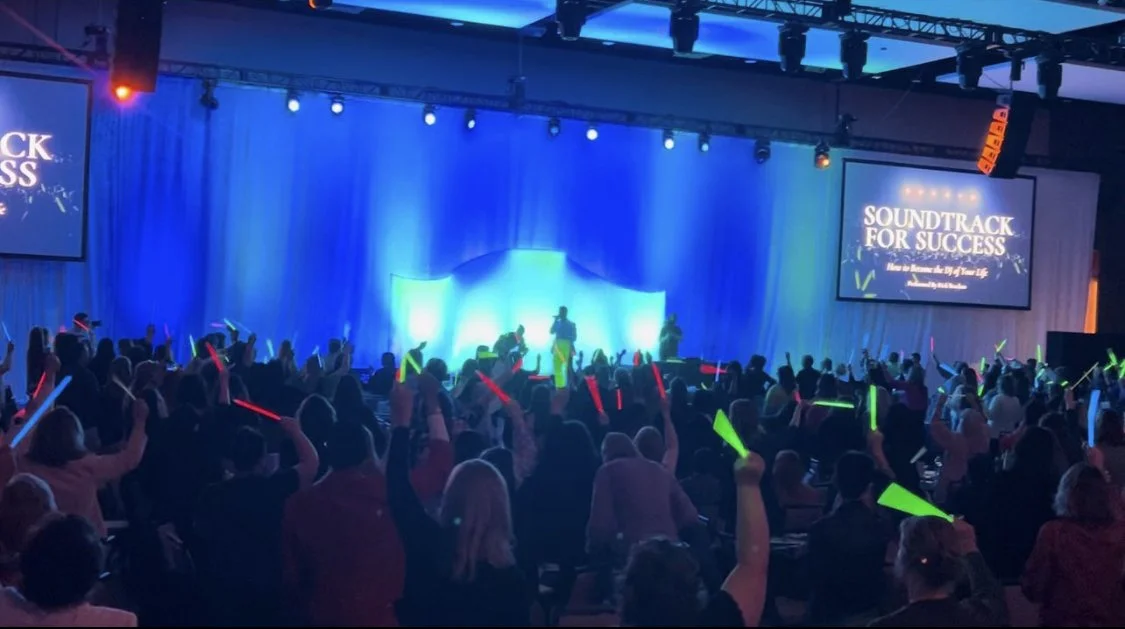
In this video, I share how my keynote “Soundtrack for Success” blends emotional intelligence and music to deliver a one-of-a-kind experience for audiences.
It’s not just a talk, it’s a performance that inspires, energizes, and connects on an emotional level.

Some careers you choose; others choose you. In this video, I share why keynote speaking is my true calling.
From connecting with audiences to sparking meaningful change, every time I step on stage, I feel a deep sense of purpose.
It’s more than delivering content; it’s creating moments that inspire people to think, feel, and grow.

Finding your voice as a speaker isn’t about being louder — it’s about being real.
In this video, I share how I discovered my authentic voice on stage and learned to lean into my natural personality strengths. Instead of trying to fit into a mold, I embraced what made me different — and that’s what helped me truly connect with audiences.

Every event is different — and my goal is to make each one unforgettable.
In this video, I share how I serve event planners in multiple ways: as a keynote speaker, emcee, and DJ.
Whether it’s delivering a high-energy keynote, keeping the program on track, or setting the tone with the right music, my focus is always the same — helping planners create an event that people talk about long after it’s over.

Before I ever stepped on stage, I was the one planning the events.
In this video, I share how my background as an event planner shaped my approach as a keynote speaker and why understanding the behind-the-scenes details helps me deliver experiences that truly connect with audiences and meet event goals.

Obstacles are part of life, but emotional intelligence helps us handle them with clarity and confidence.
In this video, I share how audiences can use emotional intelligence to overcome challenges, adapt to change, and stay grounded under pressure.
It’s not about avoiding hard moments — it’s about mastering how you move through them.

The best presentations don’t just inform — they connect.
In this video, I’m sharing why I focus on building a genuine bond of trust with every audience. It’s not about performing; it’s about creating an experience where people feel seen, understood, and part of the conversation.

Every speaker has a story — mine started with an unexpected trip to the ER.
In this video, I’m opening up about how that moment changed my perspective and ultimately led me to a career in speaking. It wasn’t part of the plan, but it became a turning point that shaped everything I do today.

Emotional intelligence isn’t just a leadership skill — it’s the foundation of how we connect, communicate, and perform.
In this video, I share why emotional intelligence became my core topic: it applies to every audience, it’s easy to strengthen once you understand it, and it’s absolutely critical for teams and companies that want to grow.

Leadership isn’t just about strategy — it’s about self-awareness and connection.
In this video, I share why leaders with higher emotional intelligence — and the courage to show vulnerability — build stronger, more loyal teams.
When people feel seen and understood, performance and trust follow naturally.

When leaders elevate their emotional intelligence, the entire organization grows with them.
In this video, I share how emotional intelligence drives stronger company cultures, higher engagement, and better results.
EQ isn’t just a personal skill; it’s a business advantage.

I’ve had a pretty random life résumé — and it’s one of my greatest strengths as a speaker.
In this video, I share how my wide range of jobs and life experiences help me connect with diverse audiences across industries.
From corporate leaders to creatives, I’ve been in enough rooms to understand what makes people tick — and that perspective helps me build instant connection on stage.

Every audience is different — and that’s exactly why I meet people where they are.
In this video, I share how I take the time to get to know my clients and their audiences before I ever step on stage. My goal is to speak with people, not to them — creating an experience that feels personal, relevant, and connected from start to finish.
When you understand who you’re talking to, you can deliver a message that truly resonates. That’s what makes every event unforgettable.

Emotional intelligence isn’t just a “soft skill” — it’s a strategic advantage.
In this video, I share the real value of emotional intelligence and the data that proves its impact.
From higher engagement and stronger leadership to better sales and retention, EQ consistently drives results across every industry.

In this video, I share why I must tailor every keynote to the specific audience I’m speaking to. No two crowds are the same, so my content, tone, and approach are always adjusted to match their energy, goals, and challenges.
It’s not just about delivering a message — it’s about creating a moment that feels designed for them.

Inspiration is great — but real success comes from lasting change.
In this video, I share how I create both immediate and sustainable transformation for audiences. My keynotes are designed to spark instant engagement while giving people the tools and mindset to keep growing long after the event ends.
It’s not about a temporary boost of motivation — it’s about building momentum that lasts.

The best keynotes start before the event ever begins. In this video, I share why I love doing pre-event calls with clients — to understand their company, audience, goals, and challenges.
Those conversations help me customize my message so it hits exactly where it needs to. And sometimes, spontaneous ideas emerge to improve the event experience.
When I know what matters most to my clients, I can create a keynote that feels aligned, relevant, and impactful for everyone in the room.

A strong company culture starts with two simple skills: active listening and empathy.
In this video, I share how these core emotional intelligence traits help leaders and teams build trust, strengthen relationships, and create workplaces where people feel valued.
When employees feel heard and understood, collaboration grows — and so does performance.
Great culture doesn’t happen by chance; it’s built through everyday moments of connection and care.

The best events don’t end when the keynote does — that’s where the real growth begins.
In this video, I share how I partner with clients after the event through post-keynote content, workshops, and deeper dive sessions.
These follow-ups help audiences turn inspiration into action and reinforce the lessons from the main presentation.
It’s about creating momentum that lasts — keeping your team engaged, motivated, and growing long after the event wraps.

My goal with every event is simple — to leave companies better than I found them.
In this video, I share how I approach each engagement with the goal of creating real, lasting impact.
Whether it’s sparking new ideas, strengthening culture, or inspiring better communication, my focus is on helping organizations grow long after the event ends.
Because the true measure of a great keynote isn’t applause — it’s transformation.

In this video, I share how I’m always progressing the message in my keynotes.
The goal is simple: make every experience feel current, personal, and designed for that audience — not a repeat performance.

Have you ever noticed how some people swear by CrossFit, others do yoga, and a few folks just walk their dog and still stay in shape?
That’s because there’s no one right way to get fit — and the same is true for success.
In this episode, we dive into why chasing someone else’s version of success can leave you burned out and off track. Using the fitness analogy, we explore how finding your personal routine, goals, and rhythm is the key to lasting, authentic success.

In this keynote clip, I share powerful strategies to set boundaries, protect your time, and take control of heated conversations. Learn how to block focus time, say ‘hold on’ with confidence, and become the thermostat — not the thermometer — in every room!

In this TV interview, I unpack the real difference between optimism and toxic positivity — and why it matters more than ever in today’s workplace.

Emotional intelligence is, by far, one of the best things you can focus on for your personal and professional success.
In this television appearance, I share what it is and why you should prioritize it for everything from leadership to happiness.

Impostor syndrome is a momentum killer. In certain scenarios, it will prevent you from even starting a new project, goal, or achievement. It's that feeling that we are not worthy of what we achieve or that we might not be qualified enough for certain recognition. If you've suffered from this, you're not alone.
Studies show that 75% of Americans have been halted by impostor syndrome at some point in their life. But what if you could use the problems caused by impostor syndrome to your advantage?
In this video, Rich gives you three ways that you can turn this horrible status into your advantage!

How you establish your personal brand is how you impact the world, both in your personal and professional life. However, we often tend to lose touch with what our personal brand is and how we are known to others as we are trying to keep up with prospecting, content creation, etc.
In this video, Rich shares 5 key elements to consider when establishing and enhancing your personal brand.

During his recent keynote at Meeting Professional International's WEC Conference, Rich shared a story from his childhood that's had a profound effect on how he views balance.
This story is also driving the foundation of his new book "Shoulder Width Apart" where he will be sharing the key elements to life balance through emotional intelligence.

In this video, you'll learn how 4 different elements of emotional intelligence can allow you to provide better client service and improve relationships with your clients across the board.
Having a higher emotional intelligence allows you to be more successful as a person and as a professional. In fact, it accounts for nearly 60% of your professional behavior and 90% of top performers have a high emotional intelligence.
R-E-S-P-E-C-T! It's something that we forget to give ourselves in a bunch of small ways. By focusing on our self respect, we not only establish more happiness for ourselves, but we also take control of the interactive environment around us. Everything from the outside influences through work and social media, to person-to-person interactions that may have a dramatic effect on us.
In this video, Rich shares 4 key tips to bring more self-respect and happiness to your life.
We often worry about the opinions, comments, or rejection of others. But what if the main voice of opposition sits in between your ears?
According to the National Science Foundation the average person has about 12,000 to 60,00 thoughts per day. Of those, 80% are negative! So how do we battle this?
Rich shares a couple of tips that have helped him, and those that he coaches, overcome the negative voices that hold us back.